

As a supplier of Opaque HIPS Granules, I am often asked whether these granules can be processed by extrusion. In this blog post, I will explore this question in detail, delving into the properties of Opaque HIPS Granules, the extrusion process, and the factors that influence the successful extrusion of these granules.
Understanding Opaque HIPS Granules
Opaque HIPS (High Impact Polystyrene) Granules are a type of thermoplastic polymer known for their high impact resistance, stiffness, and ease of processing. These granules are derived from polystyrene, a widely used plastic material, and are modified to enhance their impact strength. Opaque HIPS Granules are commonly used in a variety of applications, including packaging, consumer goods, and automotive parts.

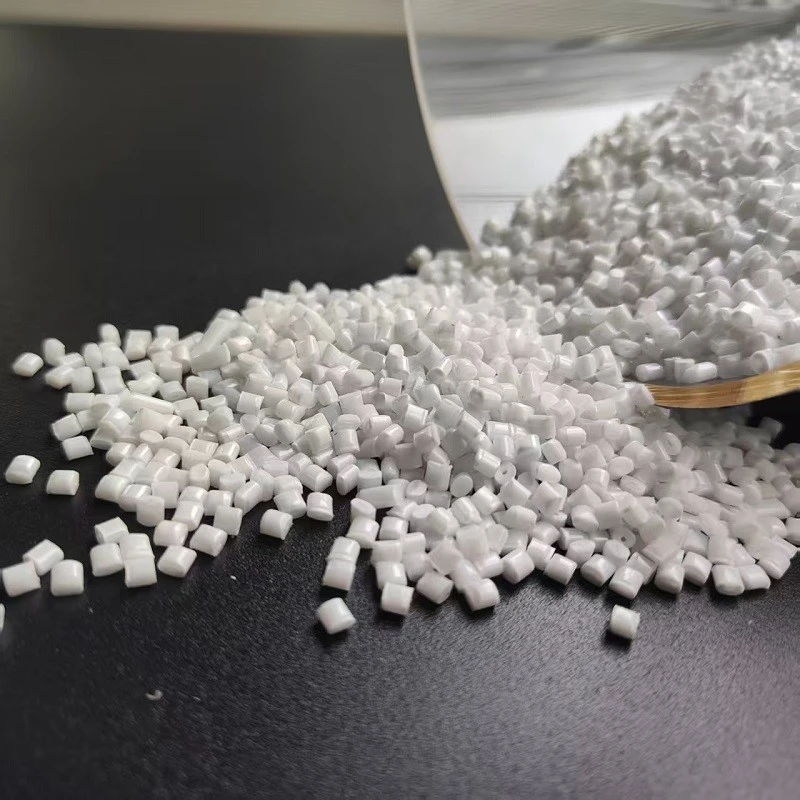
The opaque nature of these granules is due to the addition of pigments or fillers during the manufacturing process. This gives the material a solid, non-transparent appearance, which is desirable in many applications where a clean, professional look is required.
The Extrusion Process
Extrusion is a manufacturing process in which a material is forced through a die to create a continuous profile of a specific shape. In the case of Opaque HIPS Granules, the extrusion process involves melting the granules and then pushing them through a die to form a desired shape, such as a sheet, tube, or profile.
The extrusion process typically consists of the following steps:
- Feeding: The Opaque HIPS Granules are fed into the hopper of an extruder.
- Melting: The granules are heated in the extruder barrel to a temperature at which they become molten.
- Mixing: The molten material is mixed to ensure a uniform distribution of additives and pigments.
- Extrusion: The molten material is forced through a die, which gives it the desired shape.
- Cooling: The extruded product is cooled to solidify it.
- Cutting: The cooled product is cut to the desired length.
Can Opaque HIPS Granules be Processed by Extrusion?
The answer is yes, Opaque HIPS Granules can be processed by extrusion. In fact, extrusion is one of the most common methods of processing HIPS materials. The high melt flow index of Opaque HIPS Granules makes them well-suited for extrusion, as they can be easily melted and forced through a die.
However, there are several factors that need to be considered to ensure successful extrusion of Opaque HIPS Granules:
- Temperature: The extrusion temperature is critical for the proper melting and flow of the Opaque HIPS Granules. If the temperature is too low, the material may not melt completely, resulting in poor flow and surface defects. If the temperature is too high, the material may degrade, leading to discoloration and reduced mechanical properties.
- Screw Design: The screw design of the extruder plays a crucial role in the extrusion process. A screw with the appropriate compression ratio and flight design can ensure efficient melting and mixing of the Opaque HIPS Granules.
- Die Design: The die design determines the shape and dimensions of the extruded product. A well-designed die can ensure uniform flow and a smooth surface finish.
- Additives: The addition of additives, such as lubricants, stabilizers, and pigments, can affect the extrusion process and the properties of the final product. It is important to select the appropriate additives and use them in the correct proportions.
Advantages of Extruding Opaque HIPS Granules
Extruding Opaque HIPS Granules offers several advantages:
- Versatility: Extrusion allows for the production of a wide range of shapes and sizes, making it suitable for a variety of applications.
- Efficiency: The extrusion process is a continuous process, which means that large quantities of product can be produced quickly and efficiently.
- Cost-Effectiveness: Extrusion is a relatively inexpensive manufacturing process, making it a cost-effective option for producing Opaque HIPS products.
- Quality: The extrusion process can produce products with a high level of quality and consistency.
Applications of Extruded Opaque HIPS Products
Extruded Opaque HIPS products are used in a variety of applications, including:
- Packaging: Opaque HIPS sheets are commonly used for packaging applications, such as blister packs, clamshells, and trays.
- Consumer Goods: Extruded Opaque HIPS profiles are used in the production of consumer goods, such as toys, household appliances, and furniture.
- Automotive Parts: Opaque HIPS granules can be extruded into automotive parts, such as interior trim, dashboards, and door panels.
Conclusion
In conclusion, Opaque HIPS Granules can be successfully processed by extrusion. The extrusion process offers several advantages, including versatility, efficiency, cost-effectiveness, and high quality. However, it is important to consider the factors that influence the extrusion process, such as temperature, screw design, die design, and additives, to ensure successful extrusion.
If you are interested in purchasing Opaque HIPS Granules for extrusion applications, please feel free to contact us. We are a leading supplier of High Impact Polystyrene Granules, High Impact HIPS Granules, and High Gloss HIPS Pellets, and we would be happy to discuss your specific requirements and provide you with a quote.
References
- "High Impact Polystyrene (HIPS): Properties, Applications, and Processing." Plastics Technology, [Publication Date].
- "Extrusion of Thermoplastics: Principles and Practice." By M. J. Stevens, [Publication Date].
- "Handbook of Plastic Materials and Technology." Edited by Irving I. Rubin, [Publication Date].